
Hello from the digital site and welcome to my first Deep Dive!
Patrick from Digi-Pal here. 👋👋
What you will learn today:
We will have a look at Corporate Finance on the Blockchain and if it is even possible with the current Regulation.
We start with a light entrance explaining the topics. We continue to have a look at a real-world example and head over to the related regulations.
Note that this article is specially written for the conditions of the German market. If you come from another country the regulations may be different.
Ready? Let’s go down the rabbit hole 🐰🐰🐰
The starting point is the question of whether it is possible for (especially) SMEs to raise money on the crypto market.
This explicitly does not mean that a company adds bitcoins or other coins to its portfolio. Rather, it is about the procurement of financial resources, only via a new and alternative path.
The question is which concrete financial instruments already exist and to what extent they comply with the legal framework.
In advance, yes it is possible, albeit limited. With this article, I give an overview of the current possibilities as well as an outlook on what is likely to be possible in the future.
Corporate financing for SMEs via STOs, so-called Security Token Offerings - sounds complex and it is. But as a result, there are great opportunities for SMEs already now and even more so in the future.
To simplify the issue, I have used the analogy of a pizza. Using this analogy, I will break down and explain the facts as well as the individual elements.
Later in the article, I will go into the practical examples as well as the legal framework.
At this point I would like to thank from the bottom of my heart the company Invesdor, in person Mr. Jens Siebert. He advised me on the preparation of this article and answered my questions.
‼️Disclaimer‼️
This article does not constitute financial advice or investment recommendation - Do your own Research!
This article focuses on the situation in Germany. The technical approach is identical, but there are other legal frameworks in other countries which are not discussed here.
Notice:
The article was written for a presentation to students in 2021. Interim changes due to the legal situation are possible.
At this point it should be said that this is a purely informative text. There is no intention to sell and no professional connection to the company Invesdor (former Kapilendo). Due to my research and the support of Mr. Siebert I refer in some places to the procedure of Invesdor (former Kapilendo).
Therefore, I mark this post with "advertising due to brand mention". No other intent, other than to pass on information, is intended.
This article was expanded in 2023. Adjustments are marked with editet
In the beginning...
The 22.05.2010 has gone down in crypto history. On that day, someone ordered a pizza through a middleman and paid for it with a total of 10,000 Bitcoins. At the time, the value of those Bitcoins was $41. As of today, the value would be approximately $476,000,000 (as of 12/30/2021, amount rounded).
This is a milestone because this was the first transaction of a cryptocurrency for a real physical asset.
Within these 11 years, a lot has happened both in the crypto market and in the capital market.
Therefore, we start our story with this pizza and later close the circle.
We bake ourselves a financial pizza
As mentioned in the introduction, we are baking ourselves a financial pizza. Via this analogy, we approach the facts and clarify the relevant terms of how corporate finance works via the crypto market.
Let's start with the components of the pizza. A pizza is traditionally created from a base, tomato sauce, and custom toppings. Let's now apply this to our context.
Base
The base is the foundation of the pizza. For our context, the base is a blockchain.
Differentiating blockchain from coins.
Before I explain what the Blockchain is, one thing needs to be made very clear:
The Blockchain and Coins should be considered completely separately. The Blockchain is the technical infrastructure and the Coins are a vehicle based on the Blockchain. But the Blockchain itself is independent of Coin for now. The coins, however, need the blockchain to function. The why, wherefore and why of this will become clear in the following.
In our context, the Coins that are used as a means of payment (Bitcoin, Ethereum and Co.) are not relevant.
There are coins that have a technical relevance. I will go into more detail about what these are in the later context.
What is a blockchain?
A blockchain is a (usually) publicly accessible, decentralized database. All transactions are recorded in it like in a logbook. In the example of Bitcoin, this is used to make monetary transactions traceable. In principle, it is possible to map all digital transactions on a blockchain, not just monetary transactions. The term blockchain is derived from the fact that transactions are grouped together in so-called blocks and are connected to each other as if by chains.
This means that anyone can view a public blockchain and track the transactions. A principle that does not work with central databases and systems. In addition, there is the decentralized nature of the blockchain. The blockchain is distributed across many different computers. For this reason alone, it is already difficult to manipulate (even hack) it. This is complemented by the fact that all blocks are interconnected. This means that if a block is to be manipulated, all blocks of the blockchain must be changed. This means that an attempt at manipulation is quickly noticed - and any person can see this for themselves, since the blockchain is public. As things stand today, this requires such a high level of computing power that, as things stand, blockchains can be considered non-manipulable (non-hackable).
Which blockchains are eligible?
In order to perform an STO, a high-perfomance blockchain is required. This means that it should be able to process a high number of transactions (layer structure) and the transaction costs should be low. Furthermore, the blockchain should be smart-contract capable. Due to the high transaction costs, the Ethereum blockchain is used less frequently institutionally for many small-volume investments (e.g., token transfers).
Relevance of the Coins
As written in the top section, coins do not play any relevance as a means of payment. However, they do play a role in transaction costs. Transaction costs are also called "gas fees". These are used to pay the participants of the blockchain. This means that each transaction costs money. As explained in the section "Blockchain", a blockchain is composed of blocks. These must be created and validated. This is done by participants of the blockchain who provide their computing power for this purpose. In return, they receive a reward in the form of gas fees.
Tomato Sauce
Having created the basis for our financial pizza with the Blockchain, we now turn to the tomato sauce. The tomato sauce is the second indispensable part of our pizza. In our crypto corporate finance analogy, we have now arrived at the STO - the security token offering.
What is a Security Token (Offering) (STO)?
Security tokens are tokenized assets. Put simply, they are securities in token form. This is a regulated financial instrument on the Blockchain pursuant to eWpG.
According to applicable law, an STO is a debt security (also called a bond). In a bond, the investor gives the issuer a certain amount of money for a certain period of time and receives interest on it.
A security token offering on the blockchain (e.g. via the company Invesdor) is a crowdinvesting. A crowdinvesting means that a group of unrelated people invest in a common project. This means that it is a peer-to-peer structure - that is, from user to user. In this case, the company Invesdor provides the platform to enable this crowdinvesting.
That still sounds pretty complex - let's simplify it all again:
In the following, I will only go into the tokenized asset investment. The legal consideration according to eWpG will follow later in the text.
Distinction Coins & Tokens.
When we talk about this topic, we also need to highlight the distinction between Coins and Tokens.
Coins
Coins (like Bitcoin, Ether, etc.) are the product of their platform, i.e. their blockchain. Coins can also be used outside, such as for payment.
Tokens
Tokens, in turn, are built on top of already existing blockchains. They have a specific use and can only be used for that use. Outside of the application for which it was created, a token is not useful.
Therefore, as in our context, a token can be a tokenized asset. The token is assigned to exactly one asset. The type of asset is individual - tokens can be created for real estate, art, businesses, machines, etc.
The easiest way to compare an STO is with an IPO, i.e. the classic initial public offering of a company.
Advantages of tokenized assets?
Fractional ownership.
STOs allow goods with very high unit costs to be scaled down in price through tokenization (splitting the value into multiple tokens). This also gives micro-investors the opportunity to participate as investors in high-priced goods.
This market (real estate, art, bonds, stocks) has been mostly closed to retail investors.
Investor Protection
STOs are regulated financial instruments. Issuers must be listed with their clear name and address with the regulatory authority (BaFin).
In the context of an STO, a securities prospectus must be prepared (in accordance with WpPG) and submitted to BaFin for review and approval. Only upon approval by BaFin can an STO be carried out.
Investor protection refers to the STO as an approved financial instrument. There are also so-called ICOs, which in the past were more often associated with fraud (also called scams).
Tradability
Blockchains do not close - unlike securities exchanges. Therefore, trading is possible 24/7.
Due to the peer-to-peer structure (directly from user to user), this trading has a significantly increased speed, as posting on the blockchain happens almost instantaneously, whereas traditional posting may take several days.
Topping
Our financial pizza is almost ready - last but not least comes the topping on our pizza. As with any pizza, the topping can be individually very different. Our finance pizza can also be individualized at this point: With a Smart-Contract.
What is a Smart-Contract?
Put simply, a smart contract is a small intelligent program on the blockchain. Smart contracts are comparable to traditional contracts. This means that desired (contract) details are written directly into the code of the smart contract and are subsequently triggered by certain events, resulting in the programmed event. This regulates: When the condition occurs, the follow-up action is triggered in any case. This happens without the (manual) intervention of a central party, but completely automatically via this Smart-Contract. These contract details can be defined quite individually. Thanks to the programmed event control, intermediaries can be dispensed with here as well.
Examples of the use of smart contracts.- An example of this is the monitoring of the supply chain.When the goods are delivered, payment can be triggered automatically.
As another example, financing can be linked to the achievement of targets.For example, a company commits to achieving certain targets according to ESG criteria. With the achievement or non-achievement, the interest rate can be influenced.
Another example would be that investors can be turned back into customers at the same time.As an example here would be, that an investor with a certain sum receives the offered products at a discounted price - as long as he holds his shares.
As hopefully has become clear, the smart contracts can be structured completely individually, simple or complex.

Image was generated by Using Leonardo AI
Summary STOs in corporate finance
Let's briefly summarize the relevant points from above.The prerequisite for a security offering is the blockchain. The Blockchain is the technical construct and the prerequisite for tokenizing assets on the Blockchain. On top comes the STO, the actual financial product.From here on, the legal regulations for financial instruments take effect.The STO is a possibility for corporate financing.Whether this makes sense or not should be discussed with an appropriate financing partner (e.g. Invesdor). It is unlikely that a company will approach a partner with a desire for crypto corporate financing. Initially, there is a desire for a capital increase. It is up to the financing partner to select the appropriate instrument. Last but not least come the smart contracts. These offer an individual possibility for the financing design. These possibilities are only offered by Smart-Contracts and cannot be found in other financial instruments.
Difficulties & Challenges
In the imagination so far, everything looks great, and we might ask ourselves why more companies are not refinancing through the crypto market. However, as is often the case, the devil is in the details.
Innovation cycles on the capital market
Innovation cycles in the capital market are about 20-30 years. Bitcoin made its first appearance in 2009. Since 2018, we have an official blockchain strategy from the federal government and by now we already have a fully regulated financial product on the blockchain - and this is within 12 years.
Still, many issues are open, many parties are involved and some market participants are practicing protectionism for understandable reasons.
This happens because the crypto market has the potential to disrupt the entire financial industry. This is an attack on the existing business model of the traditional capital markets, which want to protect themselves accordingly.
No secondary market (currently) is available.
There is no secondary market at the current time. What does this mean? If an investor buys a tokenized asset and wants to resell it early, there is currently no marketplace for this. While some companies are in the process of creating such marketplaces, the current option is only to pass on the tokenized asset peer-to-peer by handing over the private key.
Incompatibility between fiat money and blockchains.
Our current financial system is designed around traditional fiat money (euros, dollars, etc.). This means that so far there is no interface between Blockchains and the fiat system.
This is expected to change in the future, as many countries are thinking about blockchain-based payment systems (so-called CBDC - Central Bank Digital Currency, also simply called digital euro in Germany).
Once there is compatibility between official currencies and blockchains, there will be massive disruption within the financial sector.
Practical example L'Osteria
Let's take a look at a real-world example below: The STO of the company L'Osteria SE.
With L'Osteria SE, the pizza analogy comes full circle. From the beginning of Bitcoin Pizza Day to one of the first STOs of a German franchise provider for pizza and pasta.
L'Osteria is a European-listed public company that operates a restaurant franchise system for pizza and pasta. The group also includes a pasta factory. As of today, the company has 154 affiliated restaurants. The company was founded in 1999 in Nuremberg.
As one of the first companies, they carried out an STO under the direction, support, and implementation of the company "Invesdor" (former Kapilendo).
How this went, I present in the following section:
STO of the company L'Osteria SE
Financing start: 03.12.2019
Financing end: 01.01.2020
Financed: € 2,302,700
Financing threshold: €500,000
Financing limit: € 2,500,000
Financing type: Debenture bond
Fixed interest rate: 6.25 % p.a.
Financing purpose: Growth
Interest payment: quarterly
Repayment: bullet
Country: Germany
Guarantee: no
The project was financed within 29 days 5 hours 26 minutes and 54 seconds by 1512 investors
"By 2021, we would like to further expand our branch network. With the crowdfunding, we will open three restaurants in Munich-Pasing, Chemnitz and Lörrach, whose leases have already been signed."
Execution of an STO
the company, in this case L'Osteria approaches the financing partner with a financing request - in this case the company Invesdor.
next, a preliminary review is conducted by Invesdor.
if this is successful, a mandate agreement is reached.
in the next step the campaign is structured and created.
next, the official securities documents and the securities prospectus are prepared.
as a regulated financial product, the securities prospectus (in accordance with WpPG) must be prepared and submitted to BaFin for review (see also the section Legal Framework).
once the BaFin review has been successfully completed, the campaign will be activated on the Invesdor site. From this point on, investors have the opportunity to invest their money in the campaign.
If it is an STO, as in the case of L'Osteria, the next step is to check whether the investor has a wallet that can be used with the blockchain (Invesdor uses the blockchain of Stellar). If the investor already has a wallet, the process continues at step 9. If the investor does not have a wallet, he can have one created at Invesdor.
as an approved crypto custodian, Invesdor can manage customers' crypto assets.
Investors' money is collected in an escrow account and the campaign is completed.To complete the campaign, the minimum investment threshold must be reached. If this is reached, the funding can be realized. If it is not reached, the funding will be reversed.
Once the campaign is completed, the tokens are generated by Invesdor. The funding amount is paid to the company and the tokens are posted to the investors' wallet.
the token generation takes place through a so-called "technical issuance protocol". Through this, a token is generated for each investor in the amount of their deposits. This token represents the rights and obligations of the investor from this bond. The costly and physical custody of certificates (as with traditional issues) is thereby completely eliminated.
After generation, the tokens are booked to the investors' wallets. Last but not least, the tokens are stripped of all rights, thus ensuring the authenticity of the issuance.
the payment of the interest as well as the redemption takes place annuity by SEPA transfer and is paid in Euro.
Note:
Should the company become insolvent, the tokenized assets will also go into the insolvency estate. Comparable financings like this one are always subordinated financings and are settled from the insolvency estate after the senior debt.
Conclusion
The appropriate course has already been set (both at German and European level), but it is still a patchwork. What is missing is a uniform overarching standard.
Should the digital euro be introduced on the blockchain basis (CBDC = Central Bank Digital Currency), there is the possibility that the already existing structures (such as the company Invesdor) can connect to it.
The whole technology of blockchain is still in its infancy. It is comparable to the dot-com bubble in the early 2000s.
It should be emphasized that the current situation is not compared with a bubble. The comparison refers to the number of players in the market.
Currently, there are various players on the market who are trying out what works. But the consolidation of the different players has already started.
Taking into account the innovation cycles in the capital market, which span about 20-30 years, we can summarize that a great journey has already been made. Just 12 years have passed since the first appearance of bitcoin and the approval of a regulated financial instrument on the blockchain.
Currently, it is impossible to say which blockchain will prevail and when the disruption of the financial market will come. The only fact is that it will come. Once it does, it will bring massive and great changes, especially for SMEs.
The importance for Germany as a business location
The envisaged changes, as also called for in the German government's blockchain strategy, will strengthen Germany enormously as a business location in the long term.
SMEs in particular face high hurdles in raising money on the capital market (in addition to traditional credit). In addition, Germany is "overbanked" by international standards. No other country has such a high density of banks.
In this context, it is interesting to note that, in international comparison, Germans have little affinity for the stock market. But this behavior is also changing, as many Germans started trading stocks during the pandemic. This development must be considered separately, as the affinity for shares is also accompanied by acceptance for blockchain-based securities products.
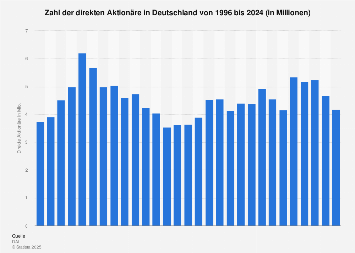
At the same time, there is no uniform standard, and only one monopolist on the stock market. This is the German stock exchange, which is understandably lobbying against this new technology, as it threatens its business model.
In the long term, Germany will benefit enormously from this, because Germany has taken on a pioneering role with its demands and implementations.
If we look at the distribution of SMEs in Germany, we notice that 99.4% are counted as SMEs by company size. Only 0.6% are large companies.

If we look into the future and imagine that these SMEs will be able to raise capital more easily in the future and also refinance themselves via crypto, this will massively strengthen Germany as a business location. But this also requires a very high level of coordination among market participants. Here, too, we are still at the beginning.
Legal framework
The capital market is subject to very heavy regulation. Therefore, in this paragraph, we take a look at what the legal situation looks like for STOs and blockchain-based securities in general.
Due to the scope, I will only superficially discuss the relevant laws and regulations. If interested, the marked links lead to further articles, publications and laws.
The corresponding links can additionally be found at the end in the references.
Blockchain strategy of the German government
The German government's blockchain strategy takes a holistic look at blockchain technology and its potential applications in five thematic areas. This was officially adopted on 18.09.2019. All information as well as further links to it are summarized on a separate website: www.blockchain-Strategie.de
These five topic areas are:
blockchain in the financial sector
promotion of projects and real laboratories
clear, reliable framework conditions
digital administrative services
knowledge, networking and collaboration
Among other things, the goal is to further expand Germany's leading position in this topic area.
The complete strategy can be read here: Blockchain Strategy of the Federal Government (pdf)
Introduction of the electronic eWpG
On June 10, 2021, the Act on the Introduction of Electronic Securities, or eWpG for short, was introduced. This law fundamentally reformed German securities law as well as supervisory law.
This introduction simultaneously implements one of the central points of the Blockchain Strategy of the Federal Government.
It is worth mentioning here that at the current time it only applies to debt securities. This means that, as things stand, bonds can be issued on the basis of blockchains. Pure blockchain-based shares are currentlynot possible.
Further details can be found in the official BaFin article.
The EU Regulation "European Crowdfunding Service Providers" (ECSP)
An EU regulation is not a recommendation, but has a direct influence on legislation in Germany. This means that this EU Regulation of 10.11.2021 has a direct effect and will be transferred to the KWG (Kreditwesengesetz) in Germany.
With the ECSP, the EU creates a valid legal framework for crowdfunding companies like Invesdor.
The crypto custody license
Since 01.01.2020 there is a new financial service requiring a license - the crypto custody license. Since this date, the crypto custody business has been officially included in the [German Banking Act (KWG)](https://www.gesetze-im-internet.de/kredwg/).
With this, the legislator creates a legal framework for the companies that are allowed to hold crypto assets in so-called wallets on behalf of their customers.
To date, I am only aware of three companies that have received this crypto custody license in Germany [“Note: dated 2020”]:
Coinbase
Tangany (Finanzen.net Zero)

Invesdor (former Kapilendo)
(former Kapilendo) sold his Crypto Custody License to the privat Bank “Hauck & Aufhäuser”
There are rumors that large institutional banks have also applied for a crypto custody license. Initially, BaFin is said to have received 28 applications for crypto custody license approval. But at the current time, there are only the three companies mentioned above in Germany that have received this license.
Update 2023
These following also got a crypto custody license:
Börse Stuttgart (Blocknox, Bison App)

Deutsche Bank

There are now 7 companies in Germany who have the Crypto Custody Licence granted by the BaFin.
The role of BaFin
BaFin (Bundesanstalt für Finanzdienstleitungsaufsicht) is the official body in Germany for the money market. In the context of blockchain-based securities (e.g. STOs), BaFin must approve this project. This is done through the prospectus review, which is regulated in the WpPG
Further information can be found in the BaFin leaflet (PDF)
Further information
You still don't have enough and/or want to get more intensively into the topic?
No problem, i got you.
Philipp Sandner from Frankfurt School of Finance & Management has created a summary with the most important resources.
With these it is possible to gain a basic understanding of Blockchain & Co. within 10 working days.
Of course, I don't want to deprive you of this link:

I would also like to point out the book "Assets on Blockchain" by my colleague Max Kops. You can find the book in your local bookstore or on Amazon.
In addition to his book he also brought the topic of Asset Tokeniziation to the TED-Stage:
Sources
Gesetz ECSP
https://eur-lex.europa.eu/legal-content/DE/ALL/?uri=CELEX%3A52018PC0113
Aufruf am 31.12.2021 um 12:15 Uhr
Gesetz EWPG
https://www.gesetze-im-internet.de/ewpg/
Aufruf am 31.12.2021 und 12:15 Uhr
Blockchainstrategie der Bundesregierung
https://www.bmwi.de/Redaktion/DE/Publikationen/Digitale-Welt/blockchain-strategie.pdf?__blob=publicationFile&v=8
Aufruf am 31.12.2021 um 12:18
Verteilung Unternehmen in Deutschland nach Unternehmensgröße
https://de.statista.com/statistik/daten/studie/731901/umfrage/verteilung-unternehmen-in-deutschland-nach-unternehmensgroesse/
Aufruf am 31.12.2021 um 12:51 Uhr
WpPG
https://www.gesetze-im-internet.de/wppg/
Aufruf am 31.12.2021 um 13:14
Merkblatt BaFin zu STOs und ICOs
https://www.bafin.de/SharedDocs/Downloads/DE/Merkblatt/WA/dl_wa_merkblatt_ICOs.pdf%3Bjsessionid%3D4830F27234722B152712B8AC5A333BCA.1_cid372%3F__blob%3DpublicationFile%26v%3D1
Aufruf am 31.12.2021 um 13:17
Education in Blockchain — How to acquire the necessary Knowledge with a workload of 10 workdays
https://philippsandner.medium.com/education-in-blockchain-how-to-acquire-the-necessary-knowledge-with-a-workload-of-10-working-days-9091dc8a3c53
Aufruf am 31.12.2021 um 13:41 Uhr
Webseite Invesdor
www.invesdor.de
Aufruf am 31.12.2021 um 13:43 Uhr
Was ist ein STO?
https://www.btc-echo.de/academy/bibliothek/security-token/
Aufruf am 02.01.2022 um 11:49 Uhr
Regulatorische Anforderungen für Kryptoverwahrer des Bitkoms
https://www.bitkom.org/sites/default/files/2020-02/200212_infopapier_regulatorischeanforderungenfurkryptoverwahrer_web.pdf
Aufruf am 02.01.22 und 13.01 Uhr
BaFin Kryptoverwahrlizenz
https://www.bafin.de/DE/Aufsicht/BankenFinanzdienstleister/Markteintritt/Kryptoverwahrgeschaeft/kryptoverwahrgeschaeft_node.html
Aufruf am 02.01.22 um 13.11 Uhr
Artikel NTTdata zu Kryptoverwahrlizenzen in Deutschland
https://de.nttdata.com/files/2021-de-art-kryptoverwahrlizenzen-in-deutschland.pdf
Aufruf am 02.01.22 um 13.14 Uhr
Erklärung zum digitalen Euro der europäischen Zentralbank
https://www.ecb.europa.eu/paym/digital_euro/html/index.de.html
Aufruf am 02.01.22 um 13.22 Uhr
Gesetz KWG
https://www.gesetze-im-internet.de/kredwg/
Aufruf am 02.01.22 um 13.32 Uhr
HPI Institut Blockchain Kurs
https://open.hpi.de/courses/blockchain2018
Aufruf am 02.01.2022 um 15.30 Uhr
Stellar Blockchain
https://www.stellar.org/
Aufruf am 02.01.2021 um 16.12 Uhr
Privatbank Hauck & Aufhäuser
https://www.hauck-aufhaeuser.com
Aufruf am 02.01.2022 um 16.18 Uhr
Digitalisierung realer Vermögenswerte auf der Blockchain
https://www.bwb-law.de/blog/digitalisierung-realer-vermogenswerte-auf-der-blockchain
Aufruf am 02.01.2022 um 18.55 Uhr
Finanzierungsdetails L‘Osteria
https://www.invesdor.de/projekte/b09f4821-4618-422b-b065-0d41d9452656#/%23section-1
Aufruf am 03.01.2021
MiCAR-Verordnung
https://eur-lex.europa.eu/legal-content/DE/TXT/?uri=CELEX:32023R1114
Aufruf am 24.09.2023
WiWo: Das Krypto-Fieber erfasst die großen Player
https://www.wiwo.de/finanzen/geldanlage/deutsche-bank-das-krypto-fieber-erfasst-die-grossen-player/29219608.html
Aufruf am 30.09.23
DasInvestment: Börse Stuttgart erhält Kryptoverwahrlizenz
https://www.dasinvestment.com/boerse-stuttgart-erhaelt-krypto-verwahrlizenz/
Aufruf 30.09.23
🤝Digi-Pals other Socials:
🚀Join the Community-Discord to discuss your thoughts and get in touch with other like-minded people
👾 Follow Digi-Pal on LinkedIn and Twitter
📣 Get directly informed on Telegram
🌍Did you know? Digi-Pal is also on the front page of the Internet, named Reddit
💌 Stay informed with the Digi-Pal Newsletter
🛒 Get my best tools and offers on Gumroad